New

AI Inbox-Proof in 3 Steps: Readability, Relevance, and Frequency

AI is playing an increasingly important role in the inbox. It determines—using agents or algorithms—whether your email reaches the recipient. Here, we explain exactly what’s changing and what the impact of these changes is.

In this blog post, we’ll explain how you can ensure that your emails and your brand remain visible in the AI-driven inbox. In other words: how do you make your email (strategy) AI-inbox-proof? We’ll cover three topics:

1. Readability takes priority over design.

We often try to entice consumers with attractive visuals. But today’s text-based AI models prefer text over images. That doesn’t mean design isn’t important. It does mean, however, that text takes the lead—both in terms of content and from a technical standpoint:

Readable content

Make the readability of your emails a priority. Images serve as visual aids and help emphasize your message.

Single-minded messaging works better for customers, but certainly for AI as well. So make sure your email conveys a single message, with one main call to action. Carry this message throughout the entire email to create a single, consistent, and recognizable narrative. Ensure consistency between the subject line, pre-header, and introduction. That way, both the AI and your recipient will know why this email was sent and what action they should take.

Once your main message has been conveyed and deemed relevant by AI, your images become important. They provide the context and visual appeal for the ultimate reader: your consumer.

Technically readable emails

Your emails must also be easy to read from a technical standpoint. Make sure the images in the text aren't too large—both in terms of file size and in relation to the text.

Keep the file size of each image under 330 kB. The total size of the email should not exceed 1 mB. For the text-to-image ratio, we recommend a 65-35 ratio: 65% text to 35% images. If necessary, you can adjust this to a 60-40 ratio. On the one hand, this ensures that your email isn’t flagged as spam by email clients due to an excess of images. On the other hand, it ensures you still include enough images to visually complement the text for your customers.

Use HTML text in your emails. Be sure not to hide text within images. Text in images is less reliable for AI. Additionally, images don’t always load. This applies to titles and the introduction, as well as the text in the call-to-action button.

Also, make sure your emails comply with SPF, DKIM, and DMARC security requirements. These verify your authenticity as the sender. If you don’t comply with these requirements, email clients will flag your emails as spam. That significantly reduces the chances that your customers will even read them.

Have you finally reached your target audience?

Also, make sure the site is easy to read on mobile devices. Use a responsive design. Optimize your CTA buttons, font size, and line spacing for mobile.

It would be a shame to end up losing customers because of mobile design.

So what now?

So you have a lot of control when it comes to sending readable emails. The great thing is that if you make sure AI can read your emails, they’ll also become much more appealing to consumers. Have you made all your emails readable yet? Great—then you’re ready for step 2: relevance.

2. Relevance must be explicit

AI must be able to understand why your email is relevant to the recipient. Relevance is the key to being placed in the priority inbox, to being accurately summarized by AI, and to being noticed by an AI agent.

Consumer behavior plays an important role here. By responding to it, you create explicitly relevant touchpoints. The consumer is therefore the driving force: when he or she takes action, you take action as well—you entice your consumer to take the next step, leading to a (subsequent) purchase.

What can AI see, and what can't it see?

An AI agent with access to multiple data sources can also detect behavior outside the inbox, such as a product viewed or a purchase made. Without that connection, AI can’t read between the lines. Therefore, always explicitly state why your email is relevant at that moment (for example: “You left a product in your shopping cart”).

From one-to-many to one-to-one

Do you still mainly send one-to-many emails? If so, focus on these 6 behavior-driven journeys, ideally supported by a CDP:

1. Post-purchase

Manage all communication related to a purchase yourself (delivery, registration, reviews, cross-selling) so that you remain in control and maintain consistency.

2. Abandoned Cart

Classic and effective; expand it with a reminder for those who didn't open the email.

3. Abandoned category

When a user views a product category multiple times: acknowledge their interest and show relevant products or reviews.

4. Abandoned Browse

For brief, casual website visits: encourage visitors to keep browsing or provide inspiration.

5. Back in stock

Notify users when a favorite product is in stock; highly relevant, especially for opt-in users.

The customer journey must be right

Will you choose a journey from the abandonment series, or perhaps the post-purchase or back-in-stock series? They all have one thing in common: explicitly relevant emails direct your customers to a relevant landing page. Once you’ve enticed your customers to revisit your website with a follow-up that’s tailored to their behavior, don’t let them land on a generic page.

Make sure this customer journey is seamless from start to finish.

So what now?

Have you decided how you’re going to make your emails relevant? If so, make sure to structure your email schedule now to strike a balance between customer journeys and newsletters. How? You’ll find out in the third section: Frequency.

3. Frequency Follows Relevance

Your emails are clear and relevant. The final piece of the puzzle for an AI-inbox-proof strategy is finding the right frequency: how often do you send emails, and to whom?

The goal isn't to send fewer emails, but rather to establish a logical rhythm. Stick to your sending schedule, but gradually fill it with behavior-driven emails instead of generic newsletters. Relevant, triggered emails always take priority over the newsletter.

No interaction?

Adjust the frequency. Use data to determine where the threshold lies:

What is the average purchase frequency?
How much time elapses between website visits?
When does a lack of response become a sign of disinterest?

Based on this, place inactive customers in a separate segment and reduce the email frequency for that segment in line with their level of engagement.

Even inactive customers deserve to be treated as relevant. These journeys work for all customers, even those without recent activity. A CDP integration adds an extra layer of personalization:

1. Birthday Email

Keep it up to date (for example, with popular gifts) and test the best timing: on the day itself, a day earlier, or with an advance notice and a reminder.

2. Relationship Anniversary

Celebrate your first purchase or sign-up—a special moment of your own amid all the birthday emails.

3. New for You

Link new collections, features, or content to previous interests and explain why this is relevant. Is that too much trouble? If so, consider whether the email is really necessary.

4. Next Best Offer

Include the most logical follow-up offer based on purchasing and browsing behavior; this can also be effectively used as an additional layer in existing newsletters.

What about the newsletter?

The newsletter remains important for the relationship, but it is always secondary to behavior-driven journeys. Apply the readability tips here as well, and where possible, use personalized offers via a CDP. Tailor the frequency to your customer’s engagement: too little contact and you’ll be forgotten; too many irrelevant emails increase the risk of spam complaints, irritation, and unsubscribes.

Ready to get started?

Now you’re ready for the AI inbox: Your emails are easy to read, relevant, and have a rhythm tailored to your interactions with your customers. Great job! Would you prefer personalized advice? We’d be happy to help you figure it out.

Please contact Roos. She’d be happy to help you figure things out. Or use our contact form.
Are your emails still being seen in this age of automated inbox placement and AI summaries? Or do they end up in the spam folder or buried at the bottom of the inbox with all the other unread emails?

Until a year ago, email was a surefire way to reach your customers and prospects. But the rapid rise of AI email agents, AI summaries, and automatic inbox placement has changed all that.

In this blog series, we'll explain how you can adapt to this. That way, your emails will remain visible in the AI inbox.

What has changed?

Email remains one of the most widely used channels for reaching consumers. At the same time, the way email clients such as Google and Microsoft handle email is changing. It is becoming less common for emails to reach the recipient immediately.

Email clients are increasingly determining which emails are visible to your customers. This assessment goes beyond traditional spam filters. Content, send volume, and context are playing an increasingly important role. Through inbox placement, the email client’s AI algorithm determines which emails are most interesting and relevant to the recipient.

In addition, more and more email clients are using AI summaries. Consumers are also using AI email agents to filter, prioritize, or summarize their emails. For example, consumers can ask their email client directly to summarize the key points of an email. Going one step further, they can also ask AI to search their inbox for emails with specific content, such as discounts or information on a particular topic.

What does this mean for me as an email marketer?

For marketers, this means that optimizing for opens and clicks is no longer enough. Thanks to Apple’s Mail Privacy Protection, we’ve known for some time that opens alone are no longer a reliable metric.

In 2026, you’ll first have to get past the AI filter that determines which emails reach consumers. The focus is shifting—from enticing consumers to making your email relevant and readable for AI. Only once you’ve succeeded in doing that can you entice your consumers.

How do I make my email (strategy) AI-inbox-proof?

1. Readability Over Design

The key is the readability of your email. If an AI can't read your email, it can't prioritize it or summarize it.

2. Relevance must be explicit

Once your email has been opened, it’s up to you, as an email marketer, to make it clear why the consumer should read your email right now. More than ever, relevance is key.

3. Frequency Follows Relevance

Is your email clear and relevant? If so, the frequency is also important. Make sure you maintain a consistent presence in the inbox. If you’re absent, you’re not relevant anyway. If you’re too present, you’ll be marked as spam. Make sure to strike a balance.

The Bonus

Email for AI isn't just a gimmick. It forces you to communicate clearly, relevantly, and with a human touch. That not only makes your emails stand out more in the inbox—it also makes them easier for the recipient to read and take action on.

That's exactly what makes your customers happy. And, as an email marketer, it makes you happy, too.

What will you do first to make your emails AI-inbox-proof?

Want to learn more about making your inbox AI-proof?

We understand if you're unsure where to start. Don't worry—we're happy to help! We'll work with you to find the ideal solution and guide you through the right steps. Let's have a conversation and optimize your inbox for AI.

Want to know which solution best suits your organization?

Please contact Roos. She’d be happy to help you figure things out. Or use our contact form.

Apple's iOS26 update will be available for download starting September 15, 2025.

What will change in iOS 26?

If you've been working with digital advertising for a while, you've probably already heard about the changes in iOS26. Apple is making a drastic shift in terms of user privacy, which will have consequences for your advertising strategies. iOS26 removes click IDs for Safari users, which means you will no longer be able to see how well your ads are performing.

Please note: iOS26 removes Google click IDs (GCLID), among other things.

Why it is important to take action on the disappearance of Click IDs

Without measured clicks, there are no measured conversions, and therefore no insight into Return On Ad Spend (ROAS). This can pose a significant challenge for you as an advertiser.

At present, not all advertising platforms have a solution for this problem, even though Safari accounts for around 20% of the market share in Europe. (source: Statista) Fortunately, there are solutions available.

Solutions for the disappearance of click IDs in iOS26

There are solutions to this new situation. Let's take a closer look at them:

1. Google Tag Gateway

The fastest solution for Google Ads users. By linking Google Tag Gateway with Google Tag Manager, click IDs and tags are stored on the server side before the visitor reaches the website. This is an effective way to maintain tracking, but there are some limitations.

Disadvantage: This solution only works for the Google Ecosystem and requires integration with Cloudflare. It is therefore not suitable for other advertising platforms such as Meta.

2. Server-Side Tagging

A more technical solution where you host the GTM container tags yourself on an external server. You have complete control over what data you store, including click IDs from Google and other advertising platforms. This offers a lot of flexibility and is ideal for more complex data structures.

Disadvantage: Implementing server-side tagging can be expensive if you host it entirely yourself and requires technical expertise. You can also choose to host it via Google to save on costs. Keep in mind, however, that the number of interactions in Google is calculated, which means that costs can quickly add up. This solution is most suitable for companies looking for customization.

3. External Server-Side Tagging

If you don't have technical knowledge or don't want to invest time in setting up a server-side solution, you can set up server-side tagging via platforms that are already fully equipped for this. For example, TAGGRS. Such a platform offers standard server-side solutions that cover Google tags and tags from other advertising platforms. An ideal choice for organizations that use different advertising platforms.

Disadvantage: Using a platform involves additional costs. It is also wise to be aware that your data will be stored with them. For many companies, however, this is the most efficient and flexible solution in practice.

What does this mean for the future of tracking?

Everything points in the same direction: server-side is the new standard. It gives you more control, better data, and a head start on competitors who will soon wake up to half-empty dashboards. Whether you choose Google Tag Gateway, implement your own server-side tagging strategy, or collaborate with an external platform, one thing is certain: server-side tagging is the future of tracking and conversion measurement.

On the positive side, server-side tracking ensures that your campaign and website figures are more accurate for all three solutions. In addition, SST solves the ad blocker problem and allows you to measure your campaigns more effectively in Google Analytics.

More about smart tracking solutions

We understand if you are unsure which solution is best for your organization. Don't worry, we are happy to help! Whether you are a Google Ads user or active on multiple platforms, we will work with you to find the ideal solution. Let's talk and optimize your strategy for these new privacy challenges.

Want to know which solution best suits your organization?

Please contact Jasper. He will be happy to assist you. Alternatively, you may use our contact form.

The AI world in 2025: What you need to know about Generative, Agentic, and Conversational AI

The AI ​​world is changing rapidly, and you have undoubtedly already heard of terms like Generative AI, Agentic AI, and Conversational AI. You might be wondering exactly what these technologies are, how they relate to one another, and, more importantly, how you can effectively deploy them within your organization. How can you apply AI practically? What benefits does it bring to your marketing, sales, or operations? And above all: how do you take the step without unnecessary risks or uncertainties? In this article, we answer these questions and show you how we at Clever Strategy help you strategically deploy AI.

1. Generative AI: Creating based on prompts

What it is:

Generative AI a technology that content new content based on existing data. Whether it's text, images, videos, music, or code, AI it possible to content new content quickly and efficiently. Models such as ChatGPT, Claude, DALL·E, and Gemini respond to a simple prompt and immediately deliver valuable content.

Why you AI get involved with Generative AI :

Imagine being able to generate SEO texts, email campaigns, social media visuals, or even product descriptions in a short period of time. What would it mean for your organization if these processes could be fully automated? You would increase production speed and ensure consistent quality, regardless of volume.

Our approach:

At Clever Strategy , weStrategy custom GPTs and Microsoft Copilot Agents: AI that are specifically tailored to your business needs, data, and tone of voice. Whether you content generate content for your website, SEO texts, or social media posts, we ensure that the model adapts to your wishes and processes. Would you rather get started yourself? With our practical AI via Clever , your teams will learn how to use generative AI .

  • Advantage: Increased production speed and consistency without compromising on quality.
  • Limitation: Effectiveness depends on the quality of the input and the way prompts are formulated. We help you streamline and optimize these processes so that AI delivers AI .

2. Agentic AI: Autonomous AI performs tasks

What it is:

Agentic AI a step further than generative AI. Not only is it capable of performing tasks, but it can also pursue goals, make plans, and take action without requiring constant input. This AI independently handle complex tasks from start to finish, saving you a lot of time and resources.

Why you AI engage with Agentic AI :

Consider automated lead follow-up, where AI sends AI emails, reviews Jira tickets, and automatically creates tasks. Or examining customer behavior and generating insights without an employee having to actively work on it. This technology can take over repetitive tasks so your team can focus on the truly strategic issues.

Our approach:

At Clever Strategy, we design and implement real AI agents for marketing, sales, and operations. These agents can operate independently within your CRM, project tools, or e-commerce platforms, always within the defined frameworks we determine together with you. Whether you want to automatically generate reports, follow up on leads, or even automate internal processes, we provide the right implementation and guidance.

  • Advantage: Increased system autonomy, allowing employees to focus more on strategic tasks.
  • Limitation: Requires careful design and clear context. Our expertise helps set up a system that is reliable and effective, with full control and transparency over the execution of the AI.

3. Conversational AI: AI communicates

What it is:

Conversational AI designed for natural interaction between humans and machines via text or voice. This includes everything from chatbots to voice assistants, which not only respond to questions but can also proactively help users.

Why you AI engage with Conversational AI :

Have you ever thought about 24/7 customer service without your employees having to be available around the clock? Or personalized shopping experiences via an AI that helps find products and even places orders? Conversational AI accessibility and ensures that you are always in touch with your customers, regardless of the time of day.

Our approach:

We help you deploy smart chatbots and voice assistants that not only provide information, but can also effectively support you in increasing conversions. Whether it's customer service or internal assistance, we ensure that the AI is AI integrated and performs optimally.

  • Advantage: Accessible, available 24/7, improves accessibility and customer satisfaction.
  • Limitation: The success of conversational AI on the quality of integrations and the design of the conversations. We ensure that the AI works AI with your existing systems, so that it does not form an obstacle, but rather a valuable addition.

How do these AI of AI relate to each other?

  • Generative AI content on prompts.
  • Conversational AI naturally with users.
  • Agentic AI performs tasks independently and makes decisions.

In practice, hybrid applications are becoming increasingly common: for example, an agent (agentic AI) that talks to a user via a chatbot (conversational AI) and simultaneously draws up AI report using generative AI . This integration ensures greater efficiency and better results.

Ready to deploy AI strategically?

You have now seen how Generative AI, Agentic AI Conversational AI can help AI organization. Whether you want to start with generative AI move on to autonomous AI, we can help you with a concrete plan, customized solutions, and practical training for your team. At Clever Strategy , weStrategy your partner throughout the entire AI, from implementation to optimization. Contact us for a demo or a no-obligation intake and discover how we can solve your AI.


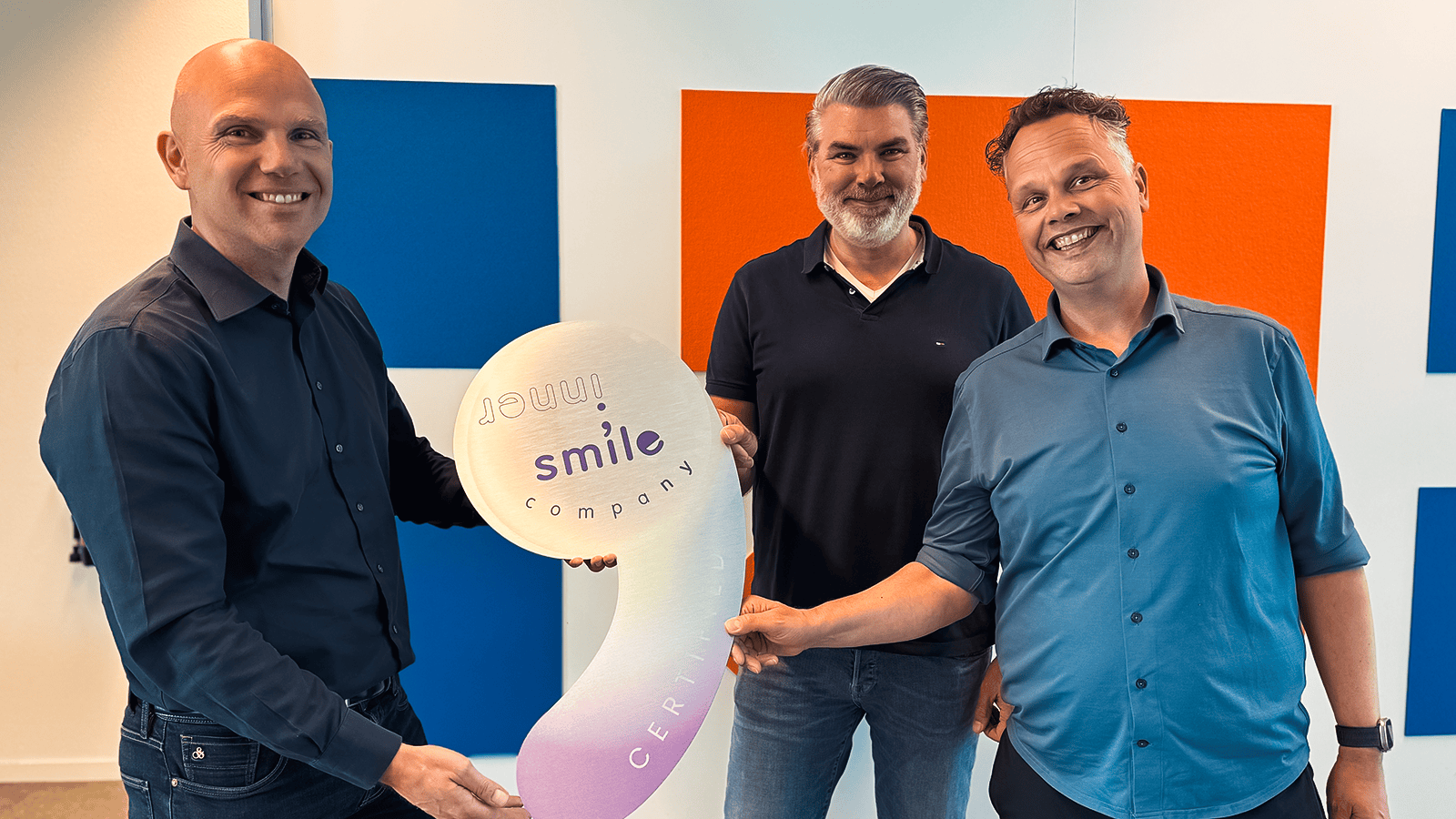
Clever Strategy the first Inner Smile Certified company

What if workplace happiness isn't an afterthought, but the starting point of everything you do? At Clever Strategy, we believe that happy people make better choices, have more energy, and achieve sustainable results. That is why we are proud to be the first to officially Inner Smile Certified .

Job satisfaction. Not an HR project, but a growth strategy

We build strong customer relationships every day. That starts internally, with our people. Because when people feel good, they perform better. Inner Smile job satisfaction tangible and measurable, just as we view marketing: with data, insights, and actions that matter.

As a certified organization, we systematically measure the happiness of our team. Not just once, but continuously. Both personally and at the team level. We use Inner Smile Happiness Wheel, developed in collaboration with the Happiness Institute at Erasmus University, to see where energy flows and where we can grow.

What this means for our people

  • Personal insight into what gives you energy and where opportunities lie

  • Tailored coaching, with genuine attention to who you are and where you want to go

  • A culture where you can be yourself and are given room to grow

At Clever, we invest not only in knowledge and technology, but also in well-being. That is not a luxury, but a necessity. Especially in a world where the bar is constantly being raised.

And for our customers?

Strong teams build stronger brands. By investing in the happiness of our team, we are building an organization that is future-oriented, flexible, and energetic. You can see this in our collaboration. In the quality of our ideas. In our drive to make a real difference.

Job satisfaction is therefore not something that is "just an added bonus." It is our driving force.

Why we share this

Because we hope that more companies will follow this path. Not because they have to (although ESG guidelines are becoming increasingly specific), but because it works. Happy people make organizations stronger, and strong organizations make the world a better place.

Would you like to know what Inner Smile can do Inner Smile your organization? Or just want to chat about happiness at work?
Let's talk! Get in touch

© Jan Kok

This is how we build job satisfaction and results at Clever

The world of work is changing. People want more than just a good job. They are looking for work that energizes them, allows room for growth, and contributes to who they are.

At Clever , we Clever that real growth starts with people. That's why we've chosen to work according to the Inner Smile philosophy: a working style that provides insight into how you're really doing, both at work and outside of it.

What is Inner Smile?

Inner Smile developed in collaboration with the Erasmus Happiness Economics Research Organization (EHERO). The approach is based on the Happiness Wheel: a scientifically based model that provides insight into how people feel in different areas of their lives.

Think of themes such as job satisfaction, health, personal development, relationships, and meaning. For two weeks, you answer short questions every day. No long questionnaires, just compact check-ins that together form a clear personal profile. You discover what gives you energy, what drains your energy, and where you see opportunities to feel better. It is not a test or an assessment. It is a mirror that helps you stay focused on what really matters.

How we work with it at Clever

Everyone in the team decides for themselves whether they want to participate. Participation is entirely voluntary and the results are personal. However, the insights gained do have an impact, including at the team level.

We have conversations based on topics that really matter. Instead of waiting for something to go wrong, we talk in advance about balance, focus, and job satisfaction.
Managers use the insights to provide better guidance. Teams are given tools to work together more effectively. And as an organization, we learn to listen better to what is going on and what people need to thrive.

What it brings

For our team, it means more peace of mind, clarity, and space. More openness and trust, because it is normal to talk about how things are really going.
For our customers, it means working with a team that is conscious and committed. A team that radiates energy, shows ownership, and dares to make choices that are good for the long term.

Because strong customer relationships start with people who are balanced.
With people who know themselves, and thus make room for others.

Want to know more? Feel free to contact us!